
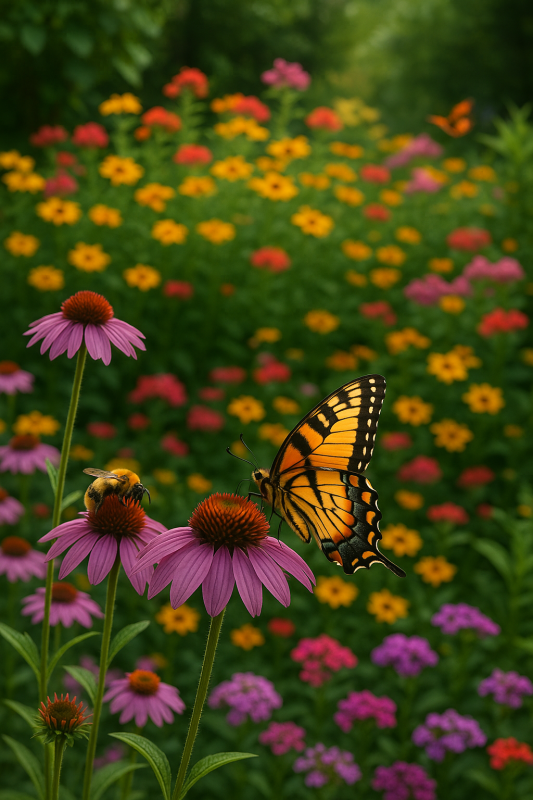
Transform your yard into a vibrant haven for bees, butterflies, hummingbirds, and other beneficial pollinators with this simple, rewarding guide. Supporting pollinators doesn’t just help the environment—it brings your garden to life with color, sound, and motion.
🧭 Step 1: Choose the Right Location
Pollinators love sunny spaces protected from wind. Aim for:
-
Full Sun: 6+ hours of sunlight.
-
Sheltered Corners: Use fences, shrubs, or trees as buffers from strong winds.
-
Avoid Pesticide Drift: Keep your pollinator space away from conventional lawn care zones.
🪻 Step 2: Plan Your Layout
Design with accessibility and diversity in mind:
-
Group Plants in Clumps: Plant 3–5 of the same species together for a larger visual and nectar target.
-
Layer Heights: Place tall plants like echinacea or Joe Pye weed in the back, mid-sized plants in the middle, and low growers like thyme or sedum in the front.
-
Bloom Succession: Ensure continuous flowering from early spring through late fall with overlapping bloom times.
-
Paths or Stepping Stones: Include a way to walk through or around your garden without disturbing pollinators.
Optional Shape Ideas:
-
Curved Beds: Naturalistic feel.
-
Spiral Layouts: For small spaces.
-
Butterfly or Bee-Shaped Beds: Great for kids’ gardens.
🌸 Step 3: Select Pollinator-Friendly Plants
Aim for native plants, and include a variety of flower shapes, colors, and bloom times.
🌼 Early Season
-
Crocus
-
Lungwort
-
Native violets
-
Golden Alexanders
🌷 Mid-Season
-
Bee balm
-
Purple coneflower
-
Coreopsis
-
Black-eyed Susan
🍂 Late Season
-
Sedum
-
New England aster
-
Goldenrod
-
Joe Pye weed
Bonus Tip: Include host plants like milkweed for monarchs and parsley for swallowtails.
🚿 Step 4: Watering & Maintenance
Pollinator gardens don’t need to be high-maintenance if you plan right:
-
Soaker Hoses or Drip Irrigation: Efficient and keeps foliage dry (reducing disease).
-
Water Early Morning: Helps plants stay hydrated during the day and limits fungal issues.
-
Mulch: Use 2–3” of organic mulch to retain moisture, suppress weeds, and moderate soil temperature—but leave some bare patches for ground-nesting bees.
-
Deadhead Spent Blooms: Encourages reblooming in many species.
-
Skip the Chemicals: Avoid pesticides, herbicides, and chemical fertilizers.
🏡 Step 5: Add Habitat Features
Pollinators need more than just nectar:
-
Bee Hotels: Nesting sites for solitary bees.
-
Brush Piles & Hollow Stems: Shelter for overwintering insects.
-
Shallow Water Source: Use a saucer with stones so bees can safely land and drink.
-
Flat Rocks: Butterflies bask in the sun on warm surfaces.
💚 Step 6: Go Beyond Your Yard
Encourage neighbors, schools, and community groups to plant pollinator patches too. The more connected habitats there are, the better chance pollinators have to thrive!
🎁 BONUS: Take Advantage of Local Offers
If you’re shopping at Town and Country, don’t forget:
-
Free 1 Gallon Perennial with $50 purchase using promo code:
pollinator25. -
Explore their wide selection of direct ship plants, Proven Winners, and native varieties perfect for pollinator gardens.
Creating a pollinator garden is an act of hope—and a beautiful one at that. Whether you’re transforming a corner of your yard or your entire front lawn, you’ll be doing your part to create a buzz and make a difference.
