
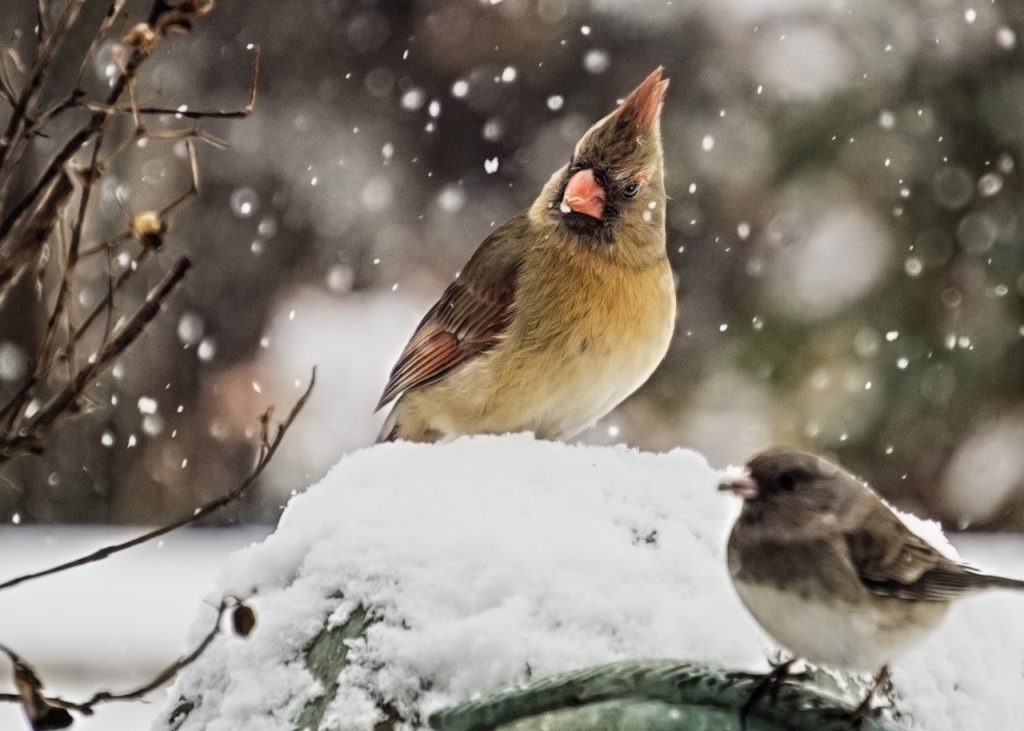
Winter can be a tough season for birds and other wildlife, as food, water, and shelter become scarce. At Town and Country Nurseries, we’re here to help you turn your winter garden into a sanctuary for wildlife, creating a space that’s as beneficial for the environment as it is beautiful to enjoy. Here are our top tips for supporting birds and other wildlife during the colder months.
1. Set Up a Winter Feast
Birds need high-energy foods in winter to stay warm and healthy. By providing a variety of feeders and food types, you can attract a wide range of species to your garden.
- Black-oil sunflower seeds: A high-fat favorite that appeals to many birds.
- Suet cakes: Perfect for woodpeckers, nuthatches, and chickadees.
- Nyjer seed: Tiny seeds that attract finches and other small songbirds.
- Peanuts: Shelled or unshelled peanuts are great for jays and woodpeckers.
- Fruit and scraps: Slice up apples, oranges, or raisins for robins and bluebirds.
Pro Tip: Position feeders near trees or shrubs to give birds a safe place to perch and escape from predators.
2. Provide Fresh Water
During winter, natural water sources can freeze, leaving wildlife without an essential resource. Adding a reliable water source to your garden makes a big difference.
- Use a heated birdbath to prevent water from freezing.
- Add a small stone or branch for birds to safely perch while they drink.
- Change the water regularly to keep it clean and safe for wildlife.
3. Create Safe Winter Shelters
Cold winds and icy weather make finding shelter critical for birds and small mammals. Help wildlife stay warm and protected by adding natural and manmade shelters to your yard.
- Leave seed heads standing: Plants like coneflowers, black-eyed Susans, and ornamental grasses provide both food and cover.
- Plant evergreens: Dense foliage from spruce, pine, or holly offers excellent winter shelter.
- Install roosting boxes: These provide a cozy, protected spot for birds to gather on cold nights.
For a natural option, build a brush pile using pruned branches and leaves to create a refuge for ground-dwelling species.
4. Add Wildlife-Friendly Plants
Choosing plants that provide food and shelter for birds is a simple way to enhance your garden’s appeal. Consider these winter-friendly options:
- Winterberry holly: Bright red berries feed birds like robins and cedar waxwings.
- Serviceberry: A multi-season shrub that offers berries through the winter.
- Eastern red cedar: Provides both food and dense shelter with its blue-gray berries and evergreen branches.
Tip: Opt for native plants to support local wildlife and maintain a healthy ecosystem.
5. Avoid Pesticides
Chemicals can harm birds and other wildlife. Embrace organic gardening practices and encourage natural pest control with healthy soil and beneficial insects.
6. Enjoy the Winter Wildlife
Once your garden is set up, take time to appreciate the activity it brings. Grab a pair of binoculars to watch the birds and keep a journal of your observations. It’s a rewarding way to connect with nature during the quieter months of the year.
Visit Town and Country Nurseries for Winter Gardening Essentials
We have everything you need to create a wildlife-friendly winter garden, including bird feeders, premium seed blends, native plants, and expert advice. Stop by today to get started on building a winter retreat for your feathered friends!
By taking these steps, you’ll not only support wildlife during winter but also create a garden filled with life and beauty. Let’s make this winter a season to celebrate nature together!
