
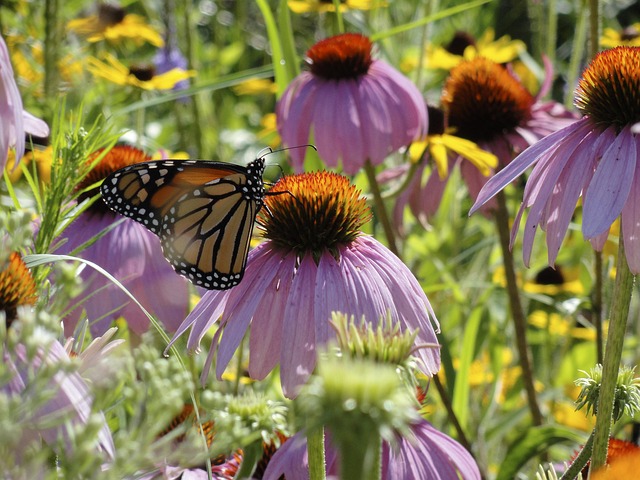
A thriving pollinator garden doesn’t stop blooming after spring. By July, bees, butterflies, hummingbirds, and other beneficial insects are busy gathering nectar, making it the perfect time to add plants that continue flowering through the rest of the summer and into fall. Choosing a variety of perennials, native plants, herbs, and annuals helps provide a reliable food source while filling your landscape with beautiful color.
Whether you’re starting a pollinator garden or expanding an existing one, these plants are excellent choices for Connecticut landscapes.
Long-Blooming Perennials
Perennials provide dependable blooms year after year while offering valuable nectar for pollinators.
Some favorites include:
- Coneflower (Echinacea)
- Black-Eyed Susan (Rudbeckia)
- Salvia
- Coreopsis
- Bee Balm (Monarda)
- Joe Pye Weed
These hardy plants bloom for weeks and attract a wide variety of bees, butterflies, and hummingbirds.
Plant Native Species
Native plants are naturally adapted to Connecticut’s climate and play an important role in supporting local wildlife.
Excellent native choices include:
- New England Aster
- Joe Pye Weed
- Blue Vervain
- Mountain Mint
- Goldenrod
Native plants often require less maintenance once established and provide critical habitat for beneficial insects.
Herbs Pollinators Love
Many culinary herbs are also excellent nectar plants.
Allow a few herbs to flower and you’ll quickly attract pollinators.
Great choices include:
- Basil
- Oregano
- Thyme
- Chives
- Lavender
These herbs are both beautiful and useful in the garden and kitchen.
Bright Annual Color
Annual flowers provide continuous blooms throughout the growing season.
Pollinator favorites include:
- Zinnias
- Lantana
- Cosmos
- Verbena
- Sunflowers
- Mexican Sunflower (Tithonia)
Regular deadheading helps many annuals continue flowering until frost.
Create a Pollinator-Friendly Garden
Simple gardening practices can make your landscape even more inviting.
Try to:
- Plant flowers in groups
- Choose a variety of bloom times
- Include different flower shapes
- Provide a shallow water source
- Limit pesticide use whenever possible
Small changes can make a big difference for local pollinators.
Why Pollinators Matter
Pollinators help produce many of the fruits, vegetables, and flowers we enjoy every year.
Supporting bees, butterflies, hummingbirds, and other beneficial insects helps create healthier gardens while contributing to a stronger local ecosystem.
Even a small pollinator garden can have a meaningful impact.
Frequently Asked Questions
Which flowers attract the most butterflies?
Coneflowers, bee balm, zinnias, lantana, and butterfly weed are among the best choices for attracting butterflies.
Are native plants better for pollinators?
Yes. Native plants have evolved alongside local pollinators and often provide the best sources of nectar and habitat.
Can herbs really attract bees?
Absolutely. Flowering herbs like basil, oregano, thyme, and chives are excellent nectar sources for bees and other beneficial insects.
Should I remove spent flowers?
Deadheading annuals encourages more blooms, but leaving some seed heads on perennials later in the season provides food for birds.
Can I create a pollinator garden in a small space?
Yes. Containers, raised beds, and even small garden borders can provide valuable habitat for pollinators.
Visit Us
Whether you’re creating your first pollinator garden or adding more nectar-rich plants to an established landscape, Town & Country Nurseries has everything you need. Our knowledgeable staff can help you select beautiful perennials, native plants, herbs, annuals, and shrubs that support pollinators while adding lasting color to your yard.
Town & Country Nurseries
1036 Saybrook Road
Haddam, CT 06438
Hours
Monday-Saturday: 9:00 AM – 5:00 PM
Sunday: 9:00 AM – 4:00 PM
Stop by today and let us help you create a beautiful, pollinator-friendly garden that blooms throughout the growing season.
