
November is here, the leaves are falling, and the temperatures are dropping. If you’ve been putting off a few gardening projects, you might be wondering, “Is it too late to plant?”
Well, don’t put those gardening gloves away just yet!
Here in Connecticut, November doesn’t always mean the end of planting season. While the ideal planting window has passed for many plants, there may still be opportunities to get a few things into the ground before winter settles in.
The secret to successful late-fall planting? It’s all about the soil, the weather, and choosing the right plants!
The Ground Matters More Than the Calendar
Just because we’ve had a few frosty mornings doesn’t necessarily mean the ground is frozen.
In fact, soil temperatures often remain warmer than the air, allowing some root activity to continue even after plants have gone dormant above ground.
As long as the soil is workable, well-drained, and not frozen, certain planting projects may still be possible.
However, there’s an important catch. Plants need time to establish healthy roots before winter. The later you plant, the less time they’ll have to settle in, so some projects are better saved for spring.
What Can You Still Plant in November?
Depending on soil conditions and the weather forecast, a few planting opportunities may remain.
Spring-Flowering Bulbs
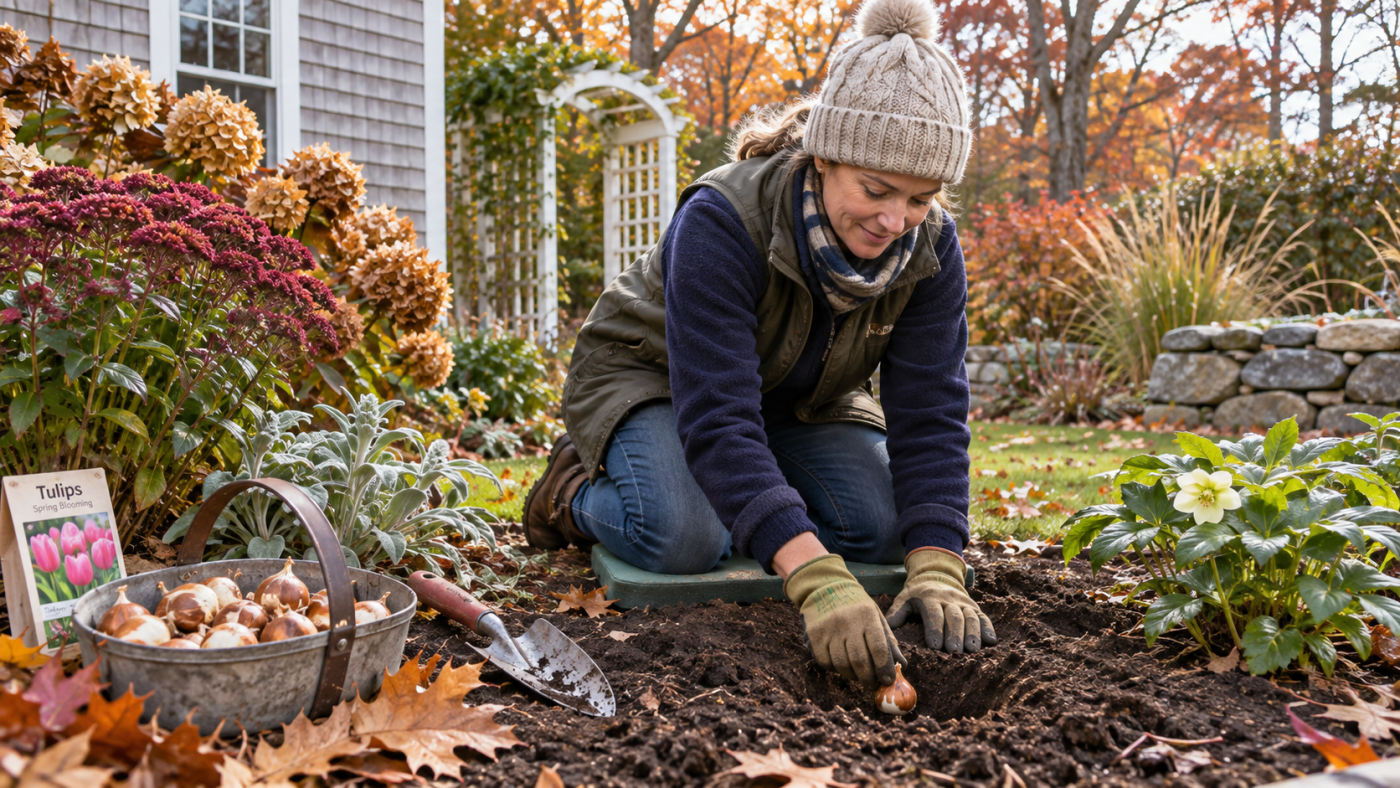
November can still be a great time to plant tulips, daffodils, crocuses, and other spring-flowering bulbs!
These beauties need a period of winter chilling to produce their colorful spring blooms. Planting them in fall allows roots to develop before winter and gives them a head start when warmer weather returns.
Choose a sunny or partially sunny location with good drainage, and plant bulbs at the recommended depth, generally about two to three times their height.
Imagine those cheerful daffodils and colorful tulips greeting you after a long Connecticut winter!
Deciduous Trees and Shrubs
Some dormant, container-grown deciduous trees and shrubs may still be candidates for early-November planting if the ground remains workable and winter conditions haven’t arrived.
However, September and October are generally better months for establishing new trees and shrubs in Connecticut.
If you’re considering planting a maple, flowering shrub, or another landscape favorite, it’s important to evaluate the plant, its root system, and the weather ahead.
For larger trees, recently dug plants, or anything that may struggle to establish before winter, waiting until spring is often the safer choice.
Garlic for Next Summer’s Harvest
Here’s another fall favorite!
Garlic is traditionally planted in autumn for harvesting the following summer. If you haven’t planted yours yet, early November may still offer an opportunity if soil conditions are suitable.
Plant individual cloves with their pointed ends facing upward in well-drained soil, then cover the planting area with mulch to help protect against winter temperature fluctuations.
It’s a simple gardening project with a delicious reward!
What Should Wait Until Spring?
As much as we love squeezing in one last planting project, some plants simply do better when given more time to establish.
Evergreen Trees and Shrubs
Pines, spruces, arborvitae, hollies, and rhododendrons are generally better planted earlier in the season or in spring.
Because evergreens retain their needles or leaves through winter, they can lose moisture even when the ground is frozen. Without an established root system, they may suffer from winter drying and damage.
Tender Perennials and Warm-Season Plants
Plants that aren’t fully cold-hardy in Connecticut should wait until spring, when temperatures are warmer and the danger of frost has passed.
Major Landscape Installations
If you’re planning a large landscaping project involving multiple trees and shrubs, spring may provide a more forgiving establishment period than late November.
Remember, gardening success isn’t about getting everything done before winter. It’s about giving your plants the best possible start!
Five Tips for Successful Late-Fall Planting
If you’re determined to squeeze in one last planting project, keep these important tips in mind.
- Check the soil first. Avoid planting in frozen, waterlogged, or heavily compacted soil. Roots need good drainage and oxygen to stay healthy.
- Choose cold-hardy plants. Look for varieties suited to Connecticut’s growing conditions, and make sure they’re appropriate for your particular location.
- Plant at the proper depth. Avoid planting too deeply. For trees, the root flare should remain visible at the soil surface.
- Water thoroughly. Cooler weather doesn’t automatically mean plants have enough moisture. Water new plantings as needed until the ground freezes, being careful not to oversaturate the soil.
- Protect the root zone. A 2 to 3-inch layer of organic mulch around trees and shrubs can help retain moisture and moderate soil temperatures. Keep mulch away from trunks and stems.
A little extra care now can go a long way toward helping your plants survive their first winter!
Don’t Forget About Next Spring!
Even if the planting window has closed for certain plants, November is still a wonderful time to plan ahead.
Take a walk around your landscape and think about what you’d like to add or change next year. Maybe it’s a flowering tree, a colorful perennial border, or some new shrubs to give your yard a fresh look.
You can also prepare future garden beds, evaluate drainage, and test your soil before the ground freezes.
The more planning you do now, the more time you’ll have to enjoy your garden when spring arrives!
Your Next Gardening Project Starts at Town & Country Nurseries!
Wondering whether there’s still time to plant that tree, shrub, or bag of spring bulbs?
Stop by Town & Country Nurseries in Haddam, CT! Our friendly team can help you choose plants suited to Connecticut’s climate, answer your late-season gardening questions, and offer advice on preparing your landscape for winter.
Whether you’re finishing up your fall planting or dreaming about next spring’s garden, we’re here to help you grow something beautiful!
Because even when the growing season slows down, there’s always something to look forward to in the garden!
